Showing posts with label classroom. Show all posts

Thursday, July 9, 2020

Online Learning

Pre-K, Kindergarten, First, Second, Third, Fourth, Fifth, Sixth, Seventh, Eighth, Ninth, Tenth, Eleventh, Twelfth, Homeschooler, Not Grade Specific - TeachersPayTeachers.com


July 9th, 2020

COVID-19 has transformed the educational landscape.  Virtual learning is new to most educators. Online meetings, small group instruction, project-based assignments are new territory.  Students need many soft skills in order to be successful with online learning (responsibility, compromise, positive flexible attitude, teamwork, communication skills, leadership skills, decision making, and more). My goal is to share resources that will help educators in a virtual setting.  

1.  Zoom Communication Posters: These posters help students (grades K-5) with teachers.  Students hold up 8 1/2 x 11 posters to get the attention of the virtual host.  Poster link.


2. Online meetings need to have clear expectations.  Virtual learning is new to students and the expectations will need to be taught.  Below is a photo of an example expectation poster.  Managing your Zoom settings (mute participants, breakout groups, private chat) will also help you establish expectations in an online environment. 


Saturday, June 4, 2016

Summer: The World Becomes the Classroom


Summer is flexible, warm, and creative! There are times when it can be unpredictable and exhausting.  Where can a family find consistency and fun?

Here are some places and activities to consider this summer.

Places: Libraries often have summer programming for all ages.  The libraries continue to find creative ways to introduce children to books, storytelling, magicians, scientists, comedians, and more!

YMCA/Boys and Girls Club:  The YMCA and Boys and Girls Clubs offer summer programming, camps, and field trips.  Our local YMCA offers free family events each week.

Setting up a summer calendar with a consistent trip to the library, park, and community center can create some predictability. It is hard for  children to be confident with a random schedule.  Before summer comes to a start talk with your child about the transition. "What stays the same and what is different" can help children see the similarities and differences between the school year and the summertime. Identify people, places, and activities that change or stay the same.

Thematic Summer Learning: This summer our son has chosen a thematic area of interest.  He would like to learn about explorers.  Here is a sample of activity menu for this Explorer theme.

  • rope making
  • dutch oven cooking
  • map making
  • art
  • plant/animal identification
  • hiking
  • field trips
  • canoes and paddle snack (apple slices and pretzel paddles)
  • s'mores snack pack
  • star gazing 


Food: We will have fun summer snacks.  Here is just a sample.....

  • ice cream in a bag
  • watermelon slices
  • summer slushies


Exercise/Health:  Keeping a healthy active lifestyle is important year-around.

  • frisbee golf
  • homemade slip and slide
  • new food challenge
  • lawn games
  • bike ride
  • create a new game
  • basketball
  • hike


Calming Activities:  

  • coloring
  • knitting
  • building bridges out of toothpicks
  • science experiments
  • fort building
  • a country drive/explore
  • family puzzles
  • journal


The last few weeks our dining room table has been filled with thousands of tiny puzzle pieces.  This puzzle became a community project.  Friends would stop by the house and would immediately participate.  The community puzzle was just a random idea but has turned into a family event. There are so many distractions on the internet and T.V. Our family puzzle time reminds us to get unplugged.



Sunday, December 16, 2012

"Twice Exceptional Students": Let's Focus on the Strengths

First, Third, Fourth, Ninth, Tenth, Eleventh, Twelfth - TeachersPayTeachers.com


In the last several weeks.  I have had conversations with parents who are concerned for their child/children with special needs.  At the same time they have children who are in need of challenging and engaging classroom curriculum.  A child who reads literature two grades beyond his/her peers has no one to share and converse their thoughts and impressions.  This can be lonely. My husband teaches children with special needs and many of them are “twice exceptional.” They struggle with a disability; yet they can write, read, or calculate at a level far beyond their peers.  Sometimes children are so advanced that they are bored and cause challenges in the classroom.  Moving children in to special education is not always the answer.  Maybe, we need to focus on a child’s strengths instead of deficits and move students into “Gifted Programs” or engaging differentiated curriculum. The definition of gifted according to the US Department of Education is:

"Children and youth with outstanding talent who perform or show the potential for performing at remarkably high levels of accomplishment when compared with others of their age, experience, or environment."
- US Department of Education, 1993.


I just love the  “potential” word in the quote above.  Some parents are just realizing their child’s potential.  It can be easy to overlook the underachievers.

Characteristics According to NSGT:

  1. Often a perfectionist and idealistic.
  2. Heightened sensitivity.
  3. Sequential or spacial learners.
  4. Far ahead in content and curriculum compared to peers.
  5. Problems solvers
  6. Often thinking on an abstract level.  May need help with concrete skills.
  7. May define success by an “A” grade.  Anything less feels like a failure.

According to Parent Involvement Matters.org “Educational research suggests that opportunities to engage in cognitively complex tasks are essential to optimize potential. This has been affirmed by studies in psychology and neurophysiology, as well. MRI brain studies show that the developing brain is plastic during the first seven or so years of life and begins to network and “hardwire” based on the degree of exploration and level of complexity a child engages in over time. That is one reason it is crucial for young children to engage in exploratory, hands-on, meaningful discovery learning rather than static, directed learning."


Friday, November 30, 2012

Twelve Days of Christmas

First, Third, Fourth, Ninth, Tenth, Eleventh, Twelfth - TeachersPayTeachers.com

We love to sing 'The Twelve Days of Christmas' in our house and classrooms.  There are two ways we use this book.  In our home we use the song to remind us of our faith.  We also like to use this book as a triangular number pattern example in the classroom.

Classroom:  The 'Twelve Days of Christmas' provides a wonderful math/music lesson in the classroom.  The gifts really start to grow, assuming that the partridge in a pear tree was given ( 1 x 12 =12) twelve times.   The book demonstrates a triangular number pattern.  

Day 1:  Partridge in a pear tree=1 gifts
Day 2:  Partridge in a pear tree + two turtledoves = 3 gifts
Day 3:  Partridge in a pear tree + two turtledoves + three French hens = 6 gifts

My husband and I love to teach this lesson.  The students predict how many total gifts were given by the twelfth day.  Many of the students guess much too low.  We use Jack Kent's 'Twelve Days of Christmas.'  The main characters overwhelmed expression just adds to the story.  The students start to feel sorry for the main character. 

In the past we have made charts to show patterns, individual posters for each day, and wrote new lyrics.    


You can find our 'Twelve Days of Christmas' lesson at our Liz and Ron Store.

Home:  Here is a quick history review.  Long ago, the Roman Catholics were forbidden to practice their faith openly.   'The Twelve Days of Christmas' was written as a "catechism song" to help children to learn about their Roman Catholic faith.  The song was written somewhere between 1558 to 1829.

2 Turtle Doves = The Old and New Testaments
3 French Hens = Faith, Hope and Charity, the Theological Virtues
4 Calling Birds = the Four Gospels and/or the Four Evangelists
5 Golden Rings = The first Five Books of the Old Testament, the "Pentateuch", which gives the history of man's fall from grace.
6 Geese A-laying = the six days of creation
7 Swans A-swimming = the seven gifts of the Holy Spirit, the seven sacraments
8 Maids A-milking = the eight beatitudes
9 Ladies Dancing = the nine Fruits of the Holy Spirit
10 Lords A-leaping = the ten commandments
11 Pipers Piping = the eleven faithful apostles
12 Drummers Drumming = the twelve points of doctrine in the Apostle's Creed 


Wednesday, October 10, 2012

Green Bluff Charm and History


Green Bluff


Cooler temperatures, bold colorful trees, and ripe pumpkins bring a new energy to the Inland Northwest.  Harvest in Washington State is the time for family, friends, and celebration.  Many families are familiar with Green Bluff located in Colbert, Washington.  The Green Bluff Growers’ Association started in 1902.  There are over 46 different farms.  Each farm has its own expertise and charm.  Corn maizes, pumpkin patches, pumpkin chunkin, tractors, apple orchards, crafts, carmel, antiques, and apple pies are all on the bluff!

Farm Chicks on Green Bluff


Pumpkin History


http://www.history.org/kids/games/pumpkinpatterns.cfm
http://www.history.com/videos/pumpkin-carving-history-of-the-jack-olantern

Pumpkin Math

http://www.pumpkinnook.com//giants/record.htm#bigones


First, Third, Fourth, Ninth, Tenth, Eleventh, Twelfth - TeachersPayTeachers.com

Monday, October 1, 2012

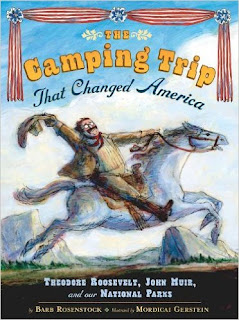
The Camping Trip that Changed America: Book Review


I just read the "Camping Trip that Changed America."  This tale is based on the true story of John Muir and President Theodore Roosevelt's camping trip.  The 65-year-old Muir was persuaded by his friends to take this "politician" on a tour of the Yosemite Valley. Would this camping trip motivate President Roosevelt to use federal law to protect U.S. forests? Yes! Roosevelt saved more wildland than any other president in history.  What a great book for the classroom!


First, Third, Fourth, Ninth, Tenth, Eleventh, Twelfth - TeachersPayTeachers.com


Saturday, September 15, 2012

Columbia Kids Website

First, Third, Fourth, Ninth, Tenth, Eleventh, Twelfth - TeachersPayTeachers.com


I have been waiting for the perfect time to read and experience the Columbia Kids website.  "A Salish Legend of Mt. Rainier" became on of my favorite Washington legends.  The village children want to hear a legend of long ago, but they have to promise to take a river bath in "exchange for the old man's story."  Also, there is a great article about Fay Fuller's climb to the top of Mt. Rainier.  Fay actually "pounded nails through the bottom of her shoes" to help with traction problems.  Columbia Kids is a great website for kids and educators!!


Copyright L.Hoxie


Follow Me on Pinterest

Friday, August 31, 2012

Gold Fever in the Northwest

Follow Me on Pinterest


So many textbooks focus on the California Gold Rush. I tend to focus on “Gold Fever in the Northwest.”  It is hard to ignore names such as "Soapy Smith," George Washington Carmack, and Erastus Brainerd.  Some of these men were considered heroes and others were considered “con men.” Many of these sites do have teacher lesson plans. The University of Washington has a wonderful site called, "Klondike Gold Rush: The Perilous Journey North."  This topic is full of adventure, challenge, and discovery.  Watch out!  This topic could be contagious.


Klondike Gold Rush 1897:


Teacher Lesson Plans:


History Information:

 Stampeder Genealogy:
Chilkoot Trail:
Extra:


Northern Idaho, 1881-1942:


    Popular Posts

    Northwest Beauty

    Northwest Beauty